One of my goals this year is to get off my phone, get more focus and scribble more words.
Tonight, I was feeling restless (having gone down the Current News Rabbit Hole of Despair), and decided to devote all that anxious focus and energy to my record collection, which I’ve neglected for years.
I was visiting one of my closest college friends in Augusta last week, and part of our routine is to visit record stores. He, too, is an avid collector, and we’ll inevitably talk about music for hours on end if given the chance.
Though not a cultural destination on par with Atlanta, Augusta does have a couple of good record stores. Grantski Records is an excellent local record store with a wide variety of new and used records, tapes and CDs. They also host underground rock and metal shows.
Psychotronic, located just down the street, is one of those dingy, claustrophobic record stores where every nook and cranny is stuffed with music. You can smell the age on some of these albums, but you can tell the owner carefully curates the ones that end up in the main stacks. The rest are in the bargain bin for a dollar or two. These are my favorite kinds of record stores, so we made a point to visit them again when we could spend more time.
We’d been digging for a while when I asked the owner if he had the new MJ Lenderman album that I wanted to buy for my buddy.
His answer? “I don’t have the new anything!”
Perfect reply.
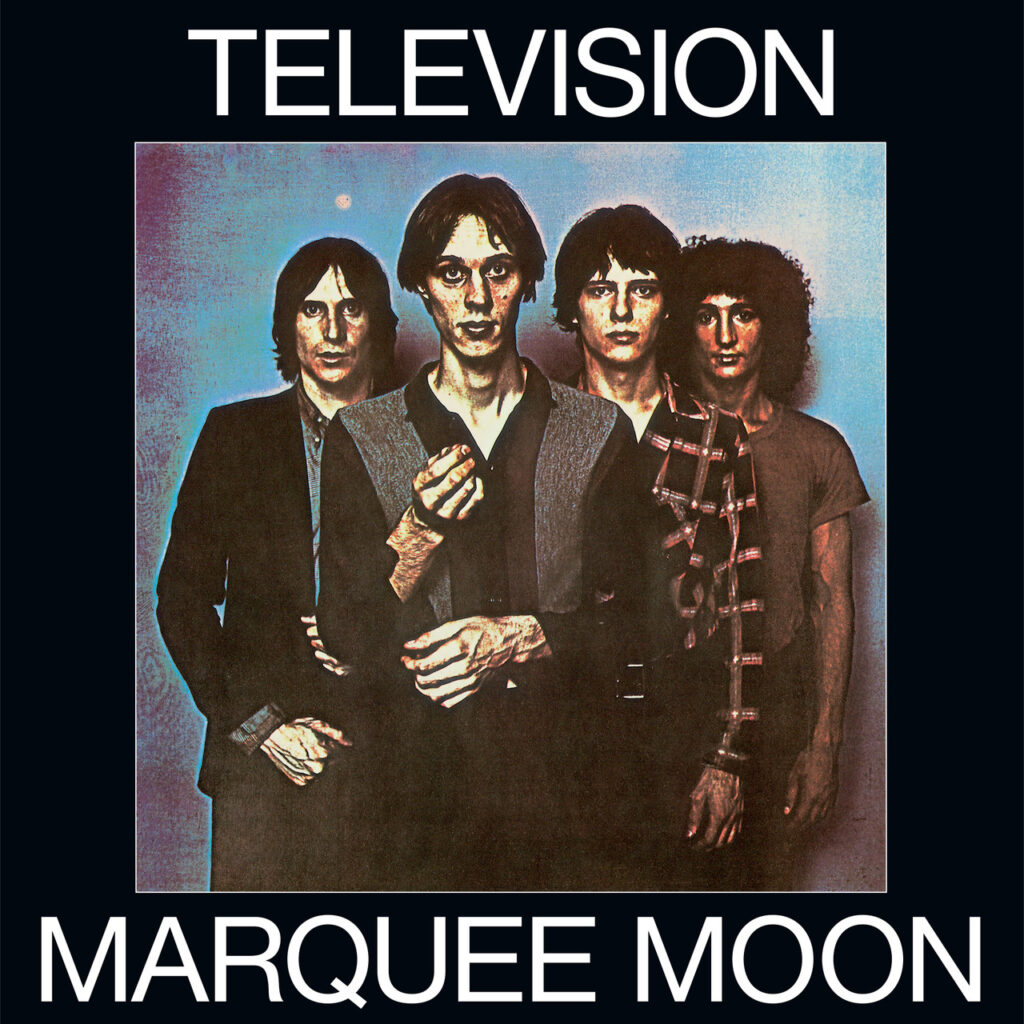
He did, however, have a couple of pristine, sealed, imported copies of Television’s first two albums, “Marquee Moon” (1977) and “Adventure” (1978).
Which leads me to this new series in which yours truly listens to an album, front to back, uninterrupted by time or cares or distractions.
This album was the perfect choice for my nervous energy. Lead singer Tom Verlaine doesn’t sing as much as he wails; high-pitched, jangly guitars intensify the effect. No surprise that they are of the school of CBGB’s, where they and their artistic classmates, Talking Heads, got their start.
It’s frenetic, jittery, and strange rock and roll music, the kind that scratches the most unreachable itches of the soul. The lead-off song, “See No Evil” perfectly captures all the insanity our country inspires these days.
“Don’t say unconscious
No, don’t say doom.
If you got to say it,
let me leave this room.
Cuz what I want
I want now
and it’s a whole lot more
than ‘anyhow’
I SEE…I SEE NO…I SEE NO EEEVIL!”
This is a record for the insecure, the ill-at-ease, the weirdos and outcasts. Verlaine is an abstract word painter who often connects ideas tangentially at best. There are few lyrical knots to climb here—mostly impressions and feelings and layers of analog sound. You can dig if you want, find meaning. And whatever you take away is yours. You can have it.
The best music does that.
The moods on this record vary from manic and frenzied (“Friction”) to laid back and funny (“Venus”). But through everything, there is Verlaine’s uneasy cool. It’s not depression. This isn’t a precursor to Radiohead. This is exploration. This is abandon…albeit peculiar.
The cover, a Robert Mapplethorpe photograph that was photocopied to give it a grainy look, makes the band look slightly mad, acne-ridden, possibly drug-addled. It belies what lies within.
Produced by Verlaine and studio legend Andy Johns (who engineered as well), this record is precise, measured, musical and impressive. Television were lumped in with “punk rock” bands, but they played an elevated punk rock. They were more of the Velvet Underground than the Ramones.
The more I listen, the more I hear New York — that New York that exists in myth. You hear the influence of Lou Reed and the New York Dolls in this music, and you can hear the future, too. You can hear Interpol. You can hear future echoes of The Strokes.
I love music that lives in that kind of space. It takes you somewhere other, and that’s the best kind of listening experience.
Great purchase. And exactly what I needed tonight.
Worth your time, if you’re so inclined as to listen to a quinquagenarian audiophile.
Leave a Reply